
New Release: Dolor y Luna
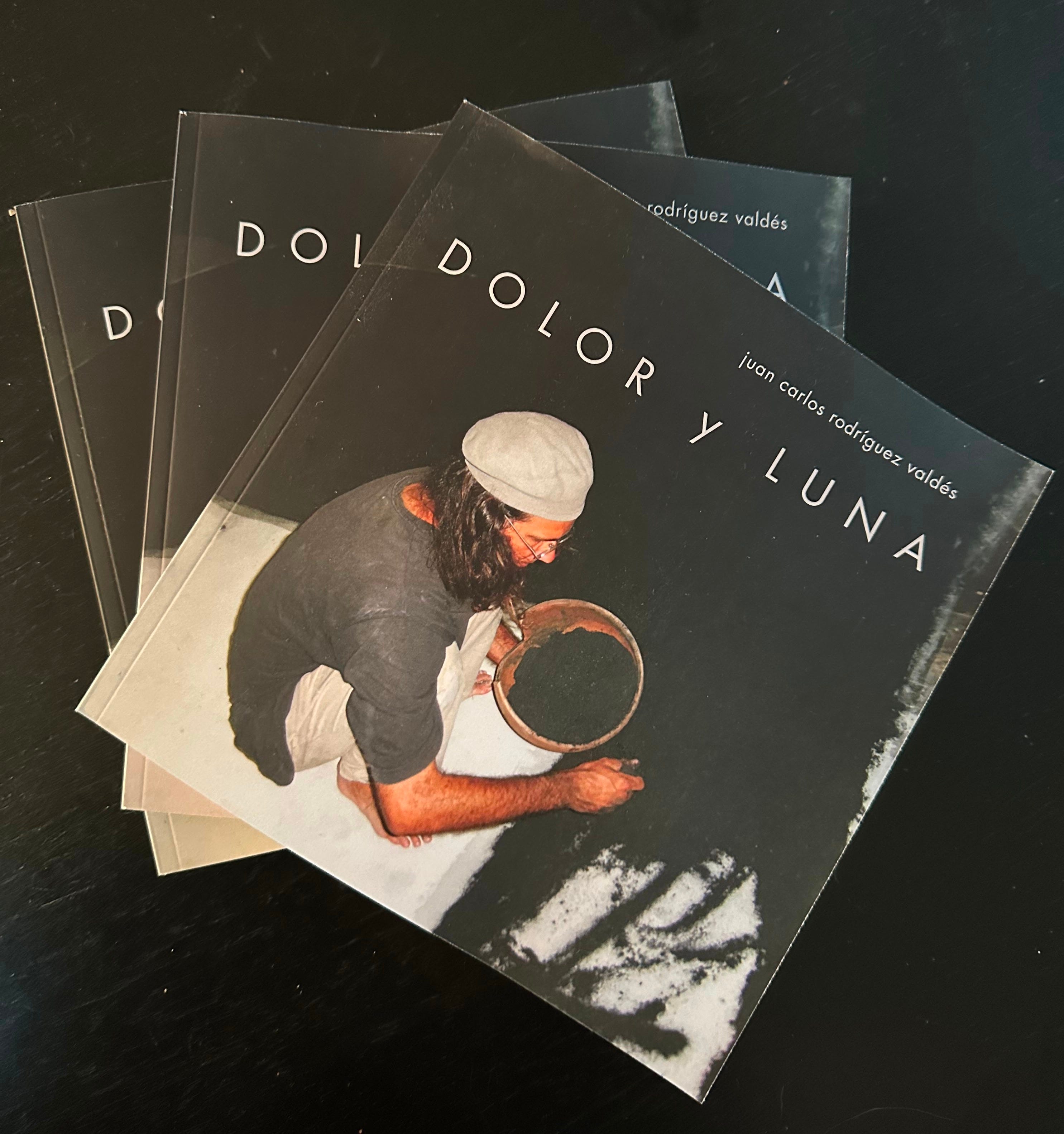
Hello dear friends and welcome new subscribers! This issue is a little different from my usual posting, since I’m dedicating it to the release of the poetry book, Dolor y Luna, with an inside peek on how it was done.
Collaborative translation
Poetry by Juan Carlos Rodríguez Valdés, English version by Carol Sill
Somehow, with its title and alignment to the seasonal cycle, this book shows itself to be a poetic object, set to appear in conjunction with the first new moon of the year. The moon was full in the busy time as we entered into the new year. I didn’t know why I wasn’t ready to announce the book until now, but the new moon opened the way.
It was an amazing experience. First, to translate from Spanish to English, working closely with Cuban artist Juan Carlos Rodríguez Valdés while he was here on Salt Spring Island in BC. And then to fine tune the publication after he returned home to Cuba from his residency.
The fine-tuning was quite a feat considering that with very little electricity or online time in Cuba, he and I managed to continue to communicate the kinds of details that the last stage of editing requires, all in our two different languages at that.
I’m so happy to finally share with you the great news that the book is out and available on Amazon.com worldwide, and in Canada at amazon.ca.
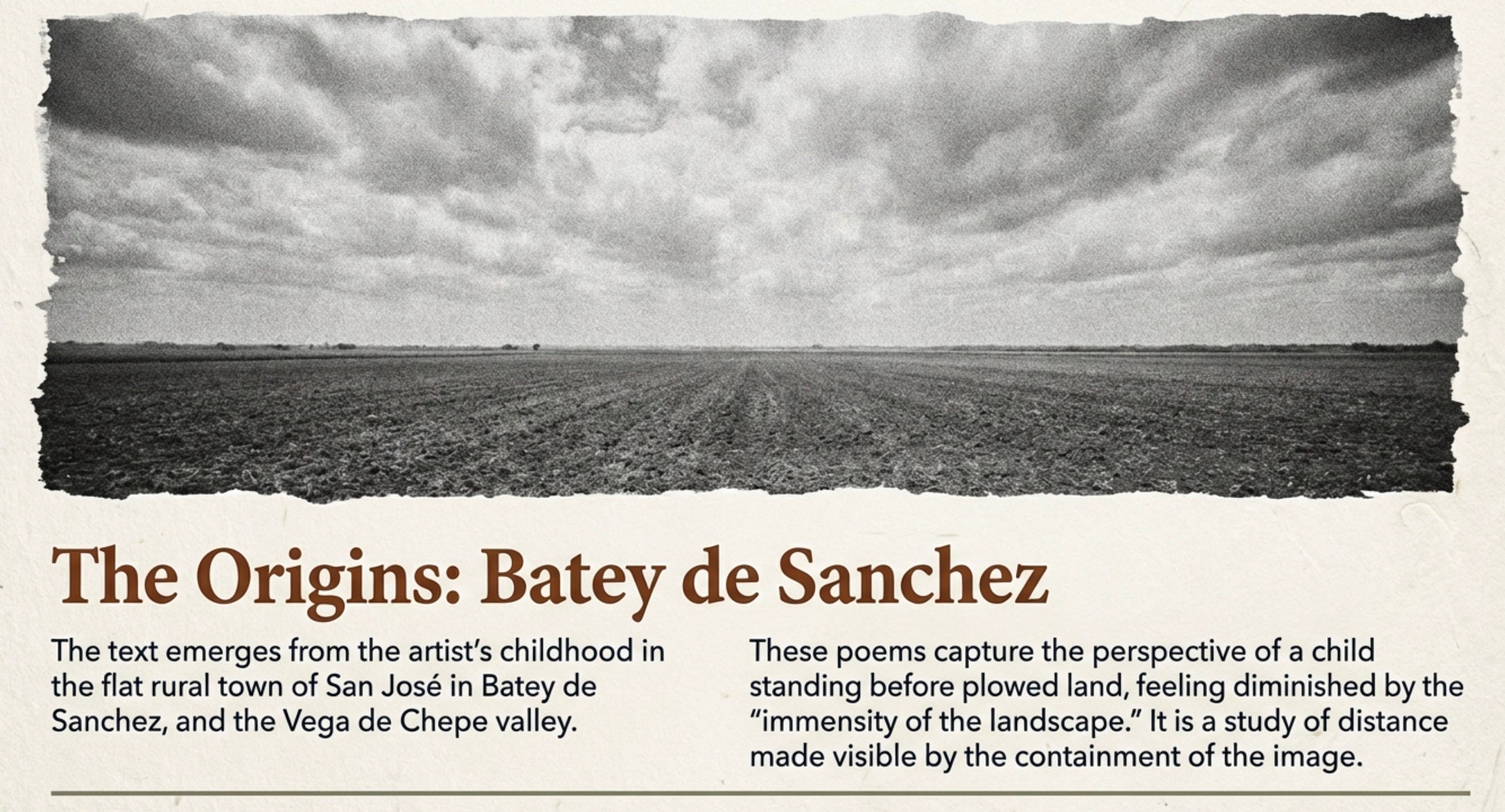
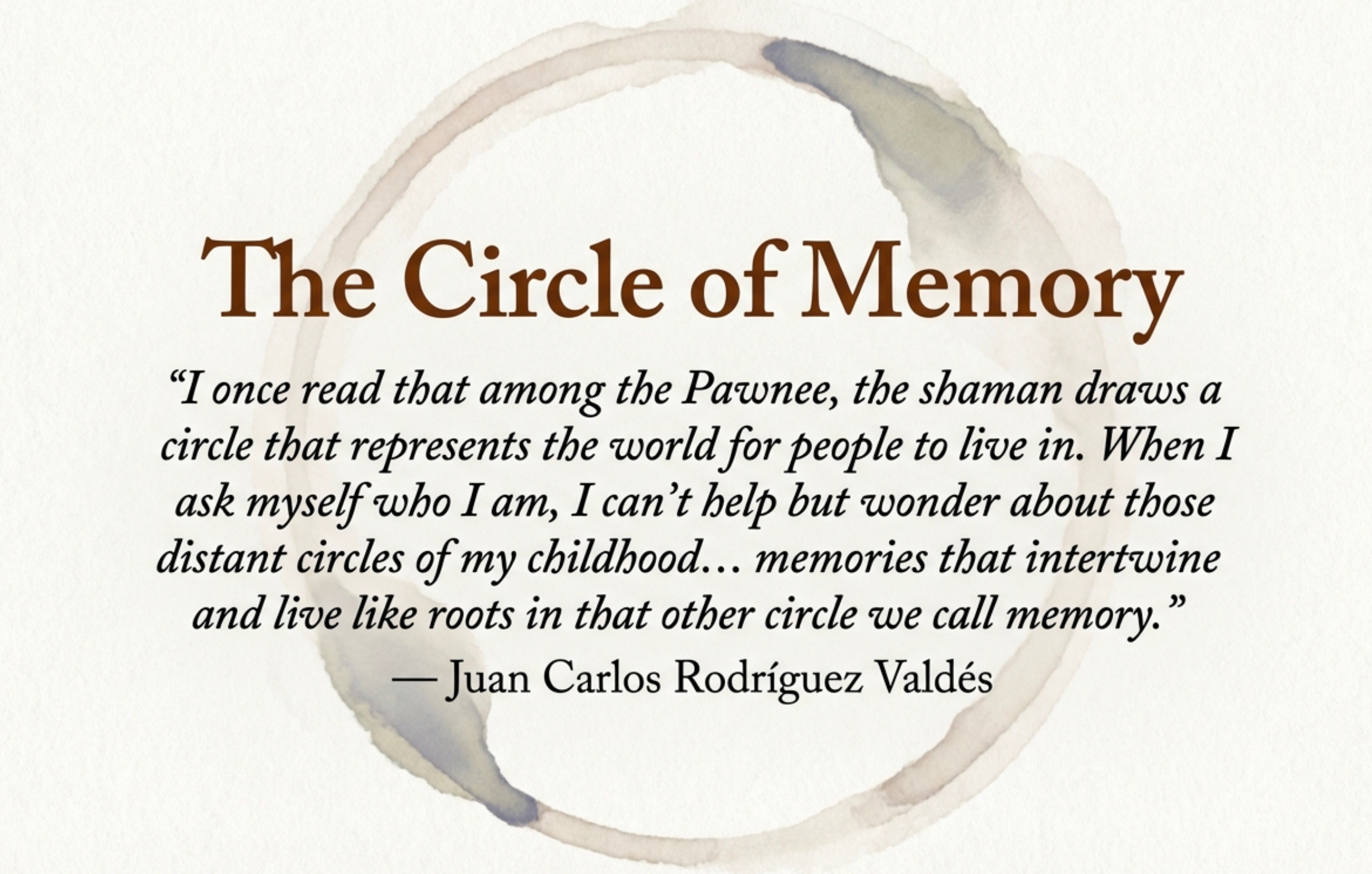
Book description, taken from the introduction: Dolor y Luna is a poetic reflection of personal childhood memories in the countryside of rural Cuba, It reflects an image in telluric memory from Cuban artist Juan Carlos Rodríguez Valdés. These spare, evocative verses explore the deep connection between landscape, identity, and childhood. Rooted in the ox-plowed fields and harvest rhythms of rural Cuba, each page of the poem becomes a furrow planted with image and longing. This is a literary text that travels in the distant circles of childhood where word, image, and landscape become one. Its poetry traces the rhythms of harvest, generation, and time itself. Here, childhood and landscape intertwine like roots beneath the moon’s shadow.
You see, Juan Carlos had written the text in Spanish to poetically accompany his multidisciplinary contemporary art project, La Cosecha (The Harvest.) While he was here on Salt Spring Island for the Unseen Island project, we came up with the concept of publishing a book including both a Spanish and English version of this literary component of his work.
But the problem was, I don’t speak Spanish. Enter Google, dressed as a translator. And to double check with a second opinion, enter another online translation app. And just to be sure, enter a real person, Nuria, who looked over the final version for any Spanish-English translation glitches. Oh, did I mention, he doesn’t speak that much English? No problem. Poetic telepathy.
For all the words that were only used in their local Cuban context, we provided a glossary. The glossary entries began with words that were left untranslated in the English version. Juan Carlos would search images on his phone to show me what he had in mind when he was writing - plants, farm implements, animals or locations. I could find English words for many of them, but some remained not only untranslatable, but also with a colloquial use in his region of Cuba only. He wanted to be sure that the Cuban meaning of the words carried the weight he intended.
For days, we sat side by side as we went over each word and each line, referring to the comparison between online translations, and I made those selections, looking with a poetic eye and sometimes taking a leap toward meaning or implication rather than literally plodding word-for-word.
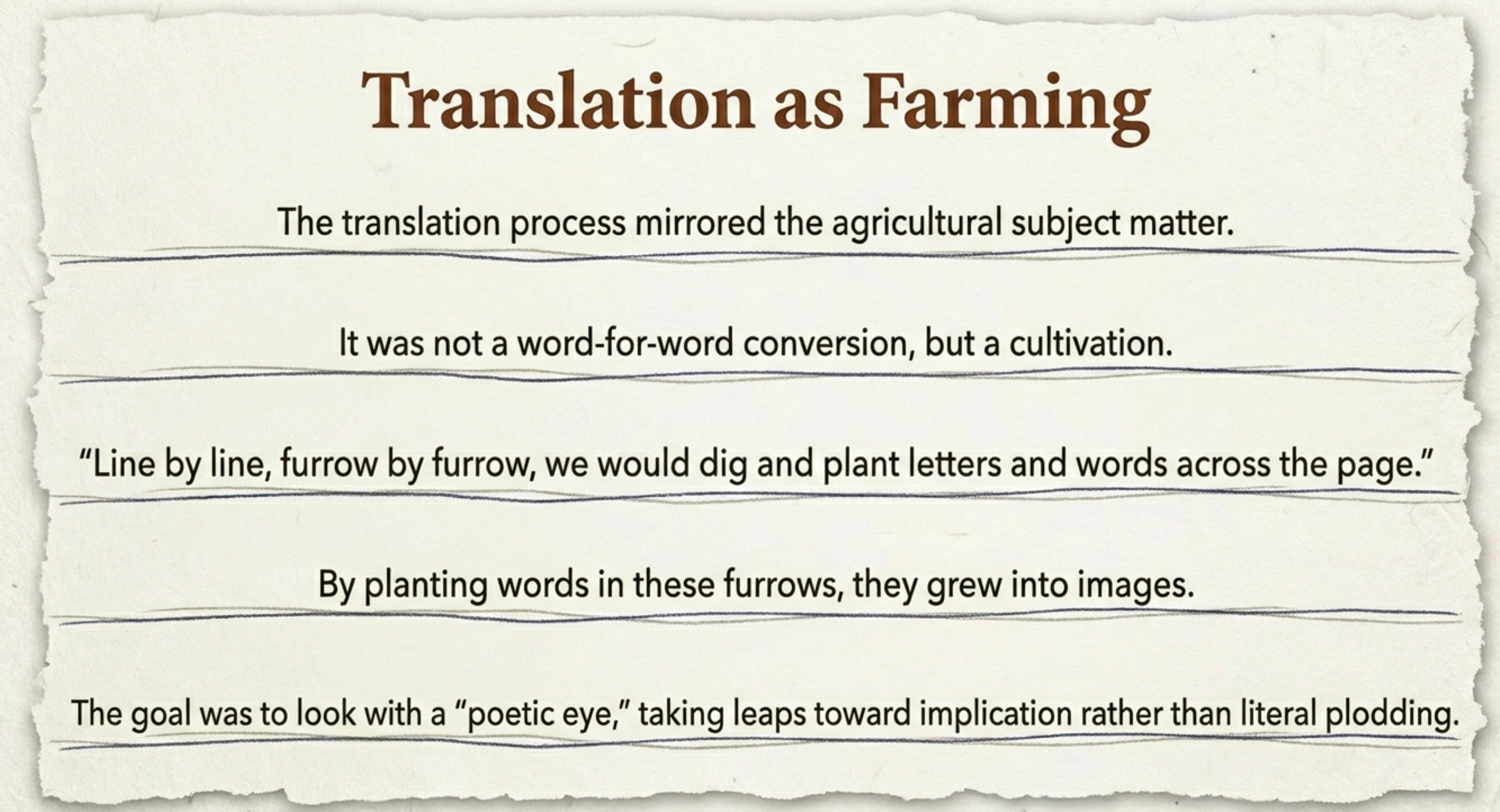
Then he would take that final line, put it into his English-Spanish translation app, and flag certain words or connotations for us to discuss. And so we went, page by page until the work was done, and the poem complete.
From a poetic point of view, it seemed there was no way to translate the title, Dolor y Luna, from Spanish to English. The implications of Dolor in the context of the work are too layered, and since most English readers know the word Luna, we left it as it is. We decided to have both languages in the body of the book, and the back cover information is all in English. (One implication of the phrase, dolor y luna, is the folk belief that the full moon amplifies physical and emotional pain.)
That was the translation process, then we did the layout working with the idea of creating a physical space on the pages, so each line is like a horizon. We set both Spanish and English together on each page. People have said it looks elegant, and intriguing. The idea is to slow down the reading process, to allow the poetic images to emerge in the mind of the reader.
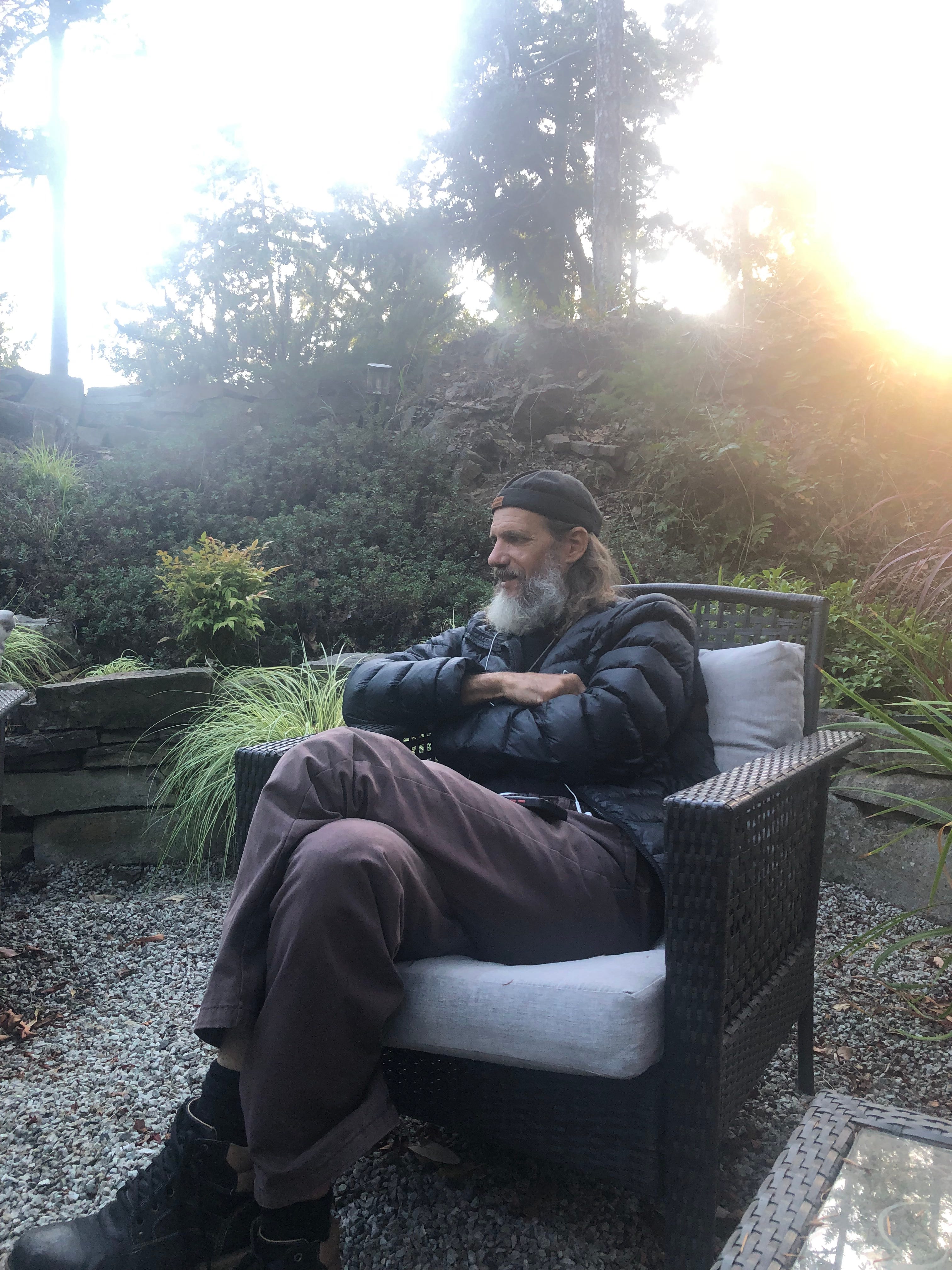
Here’s a one-sheet with book details, description and author bio. Click for larger image.
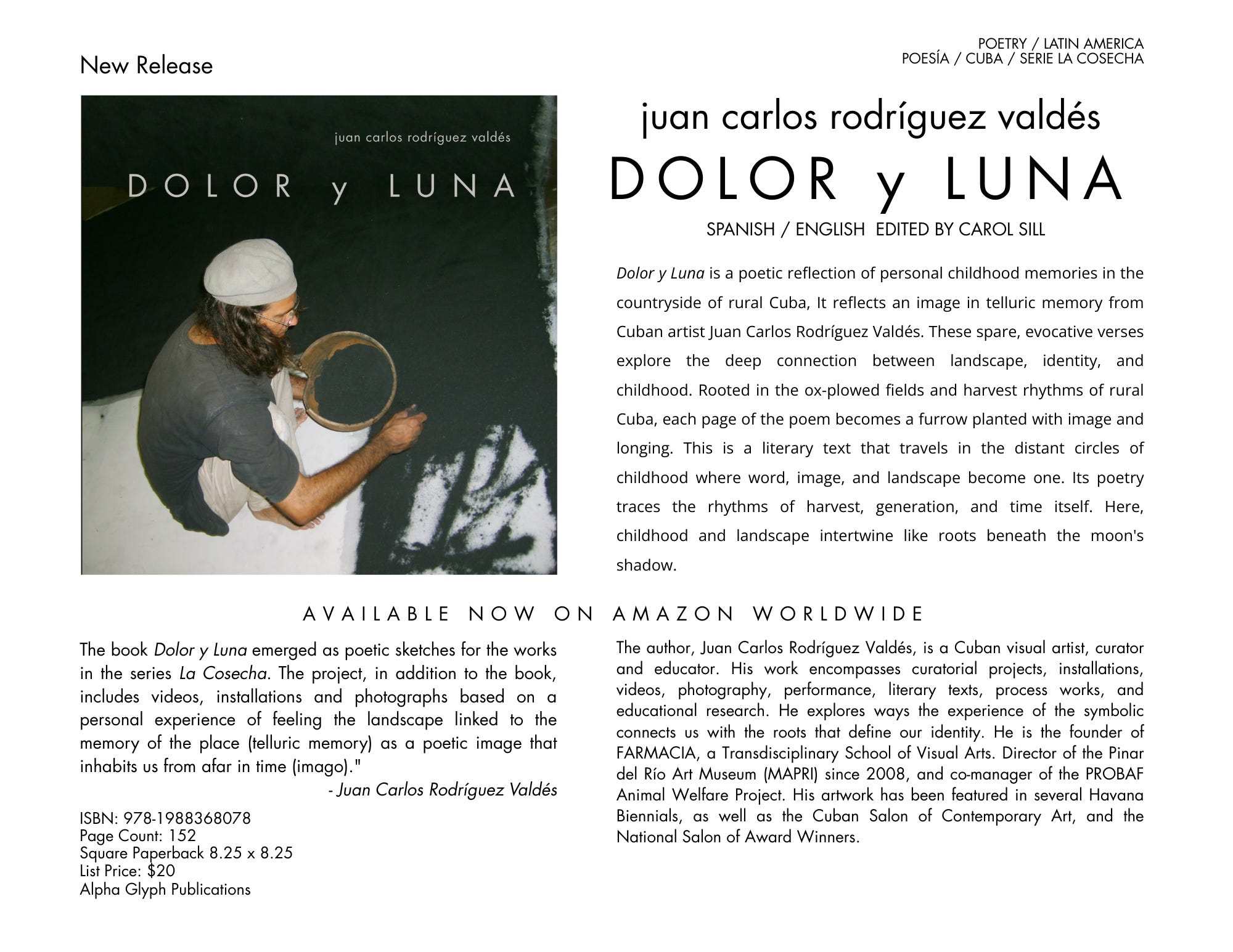
The image on the cover: Dolor y Luna (detalle del proceso), 2007. Serie La Cosecha Instalación. Polvo de carbón / lienzo, máscara de barro y vara para buey. Medidas: 250 x 470 x 10 cm. Colección del artista.
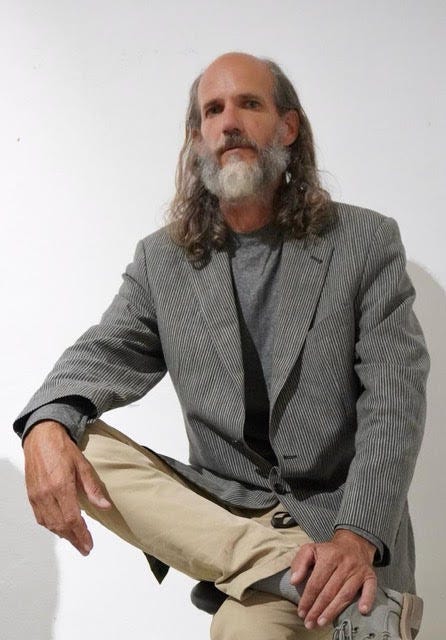
Dolor y Luna is available at Amazon.com HERE
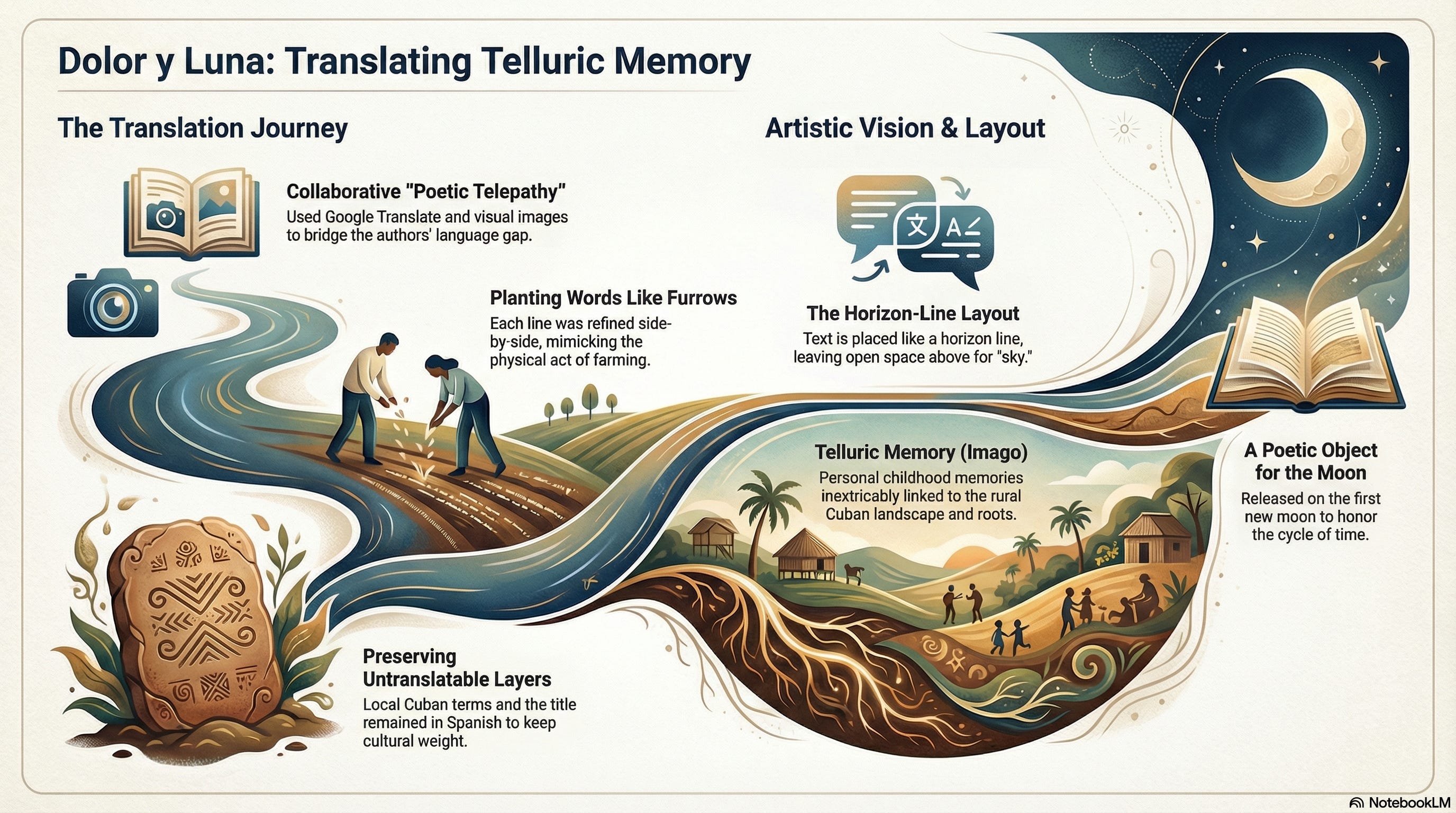
Thank you so very much for reading and sharing this post. Remember, you can also listen to this using the app. This issue’s photos are credited in their captions, other images from NotebookLM.
Please click the heart if you liked this post.
This quote popped up for me, and I thought of this new book....
“A writer’s heart, a poet’s heart, an artist’s heart, a musician’s heart is always breaking. It is through that broken window that we see the world.”
— Alice Walker
Fascinating project to translate poetry from a language you know little of.
Your process sounds reasonable enough, and the NotebookLLM inforgraphic is pretty cool.
I read a lot of poetry, so the project fascinates me even more on that basis.
I have a particular love of poetry said on the breath,
so let me encoure you and Juan Carlos to consider, perhaps,
reciting the work, you in English and him in Spaish...
Just a thought....
==>Jim