
One Continuing Uncontained World
Welcome, friends and new subscribers! Landsat spells names! You can do yours at this LINK: just tap your name and see it spelled out in NASA Landsat imagery of Earth!

Today’s issue has one focal point, my novel-in-progress, with some comments in writing, then as an illustrated sequence of cards.
As you may know, over the past few years I’ve been working on a novel, Project Wunderkabinett, and from time to time you may have seen a few excerpts here of the work in progress. I’ve looked at it from many angles, trying to make sense of what and why it has been my ongoing project for so long now.
It came to me that I was working and reworking the same material under various guises. Now resonant connections between this new work and other writing that came before it have finally appeared. This sort of meta overview is helping me grapple with the next phase of this book, and before it is released it into the wild! I’ll keep you updated on it all, and here are some thoughts on the puzzle.
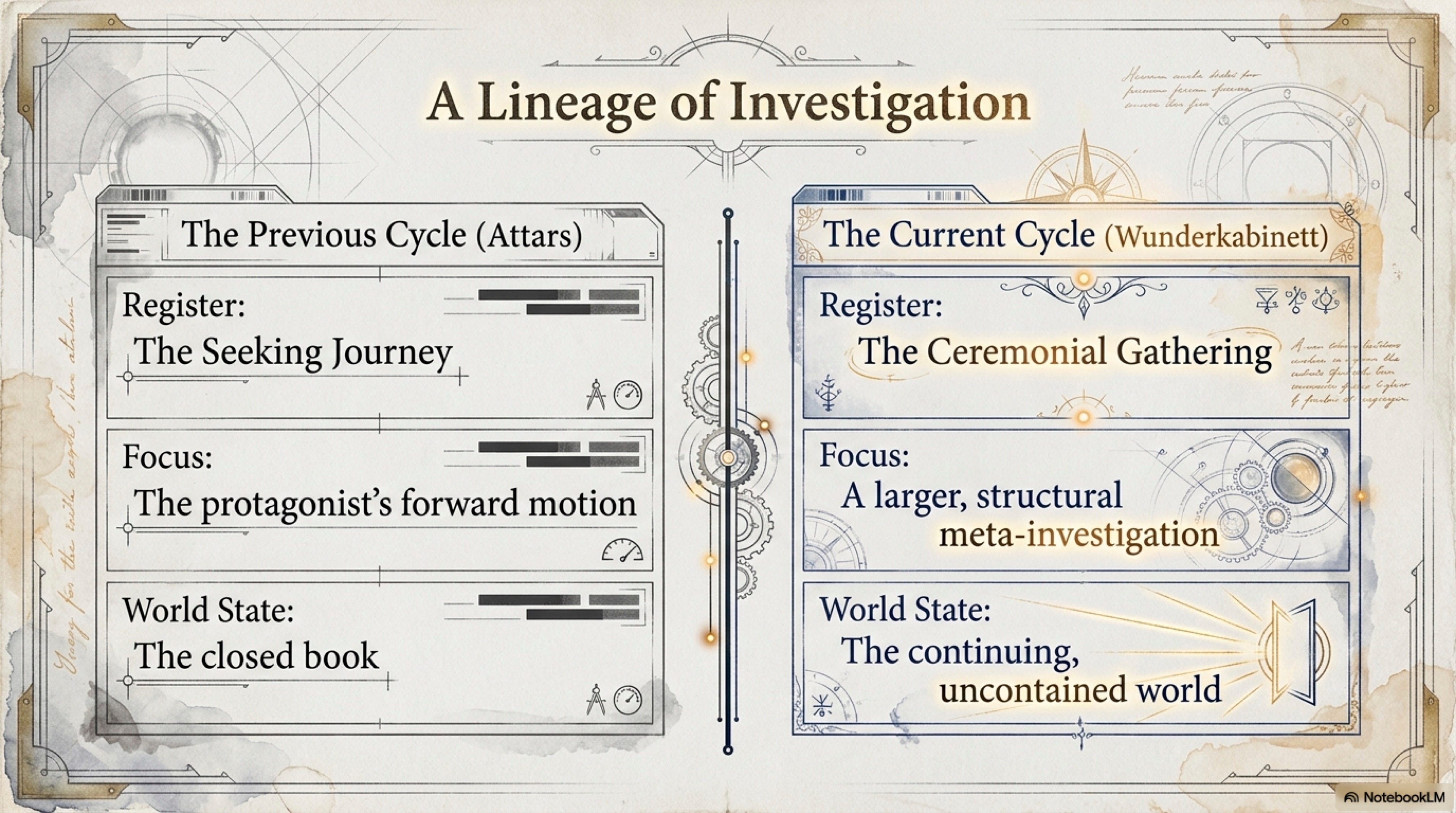
Returning to Wunderkabinett after Attars
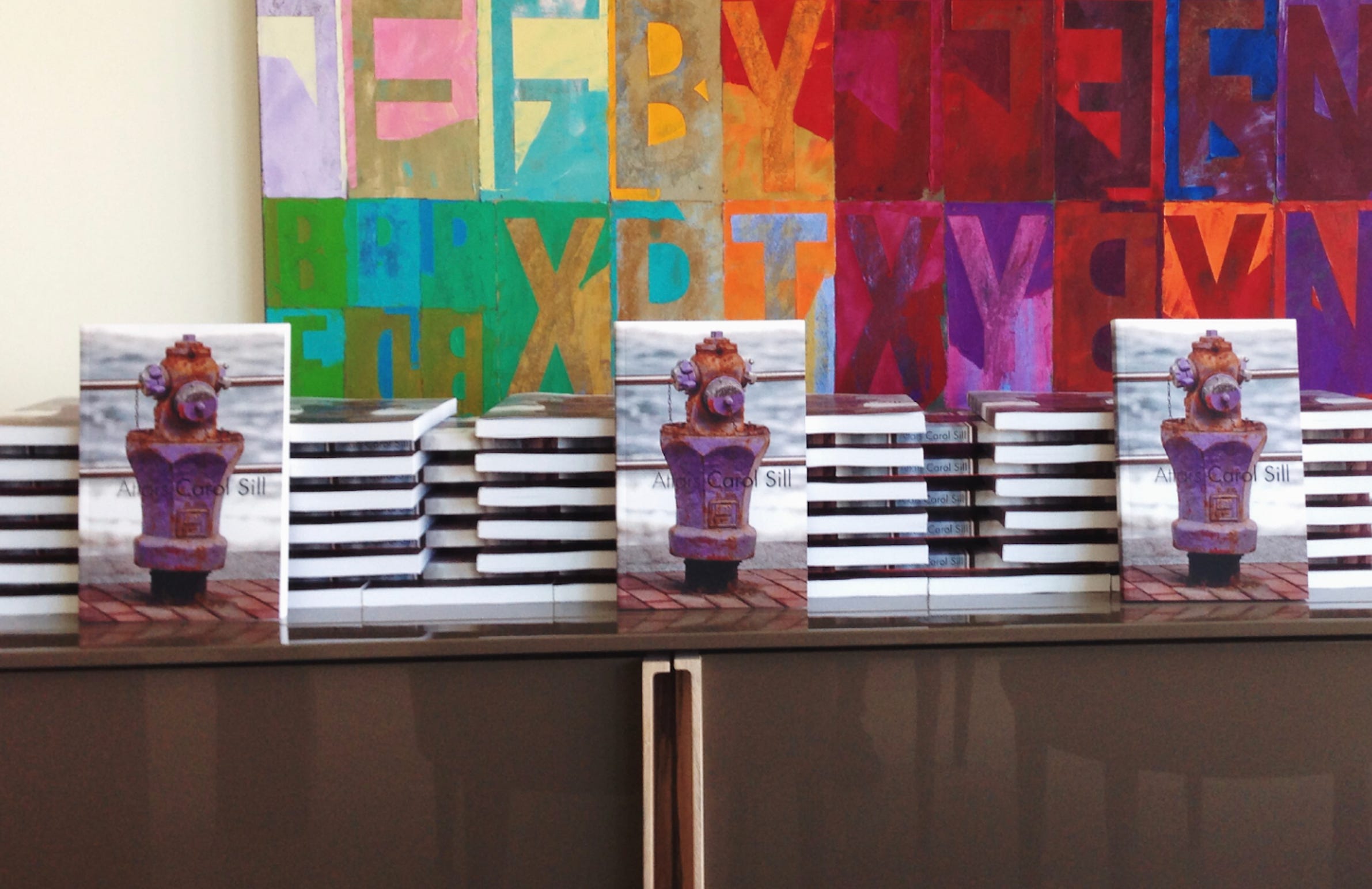
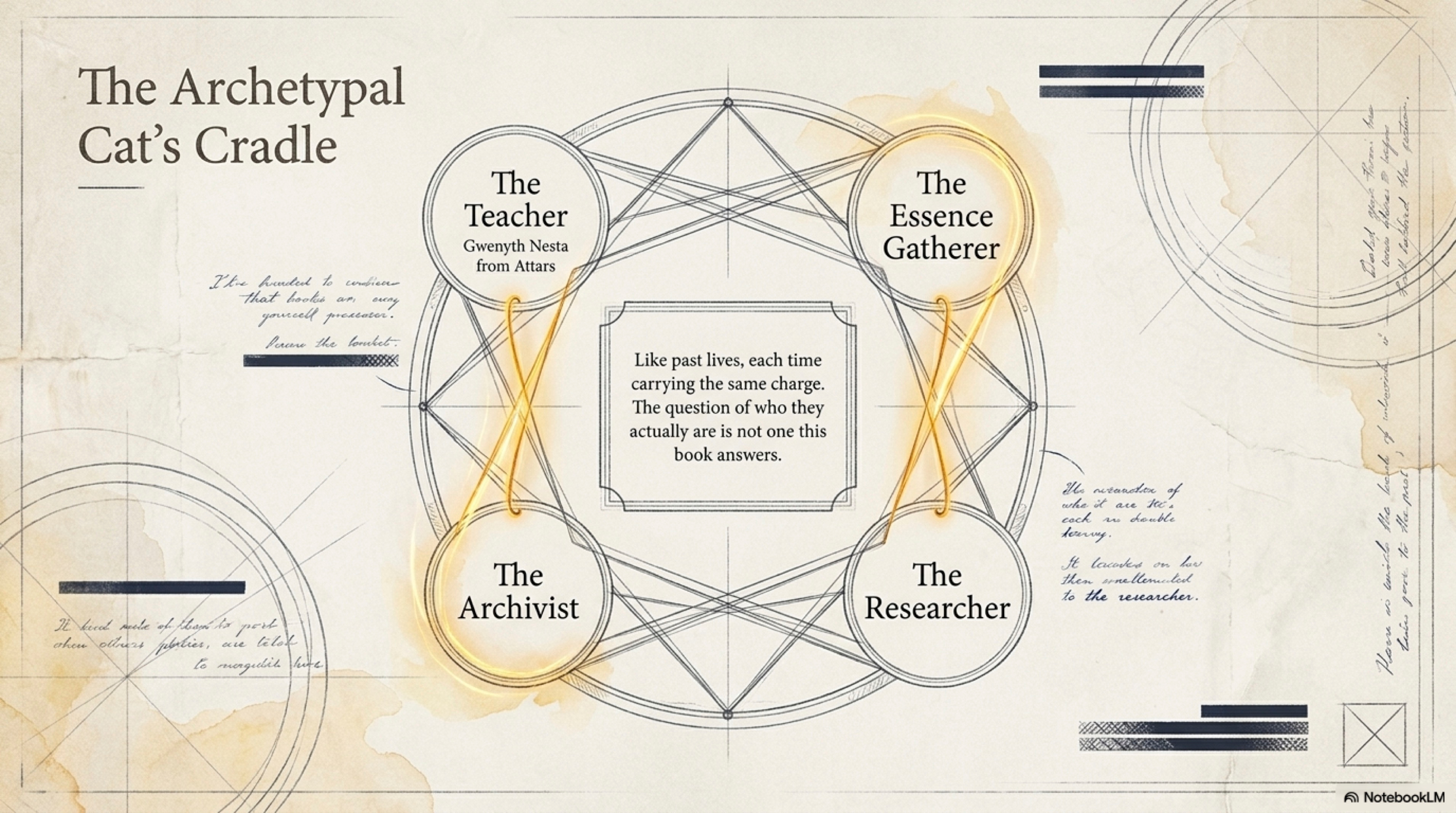
After I finished the novel, Attars, I found that the world of Attars continued, and it didn’t close when the book did. A figure in it kept pressing for expression. I thought it was the archivist. She seemed to layer over the teacher, Gwenyth Nesta, from the first book, or perhaps to precede her, or was she part of her backstory? I wasn’t sure. Maybe the archivist was the essence gatherer after she left the dunes? That didn’t seem likely, since I was so identified with the main seeking protagonist in both books. Whatever it means, these characters were continuing on here in Project Wunderkabinett in a new form. I began to understand that these figures repeat: archivist and researcher, teacher and gatherer; like past lives, each time carrying the same charge into a different configuration. Kind of a moving cat’s cradle. The question of who they actually are is not one this book answers, but I see that the book offers another iteration.
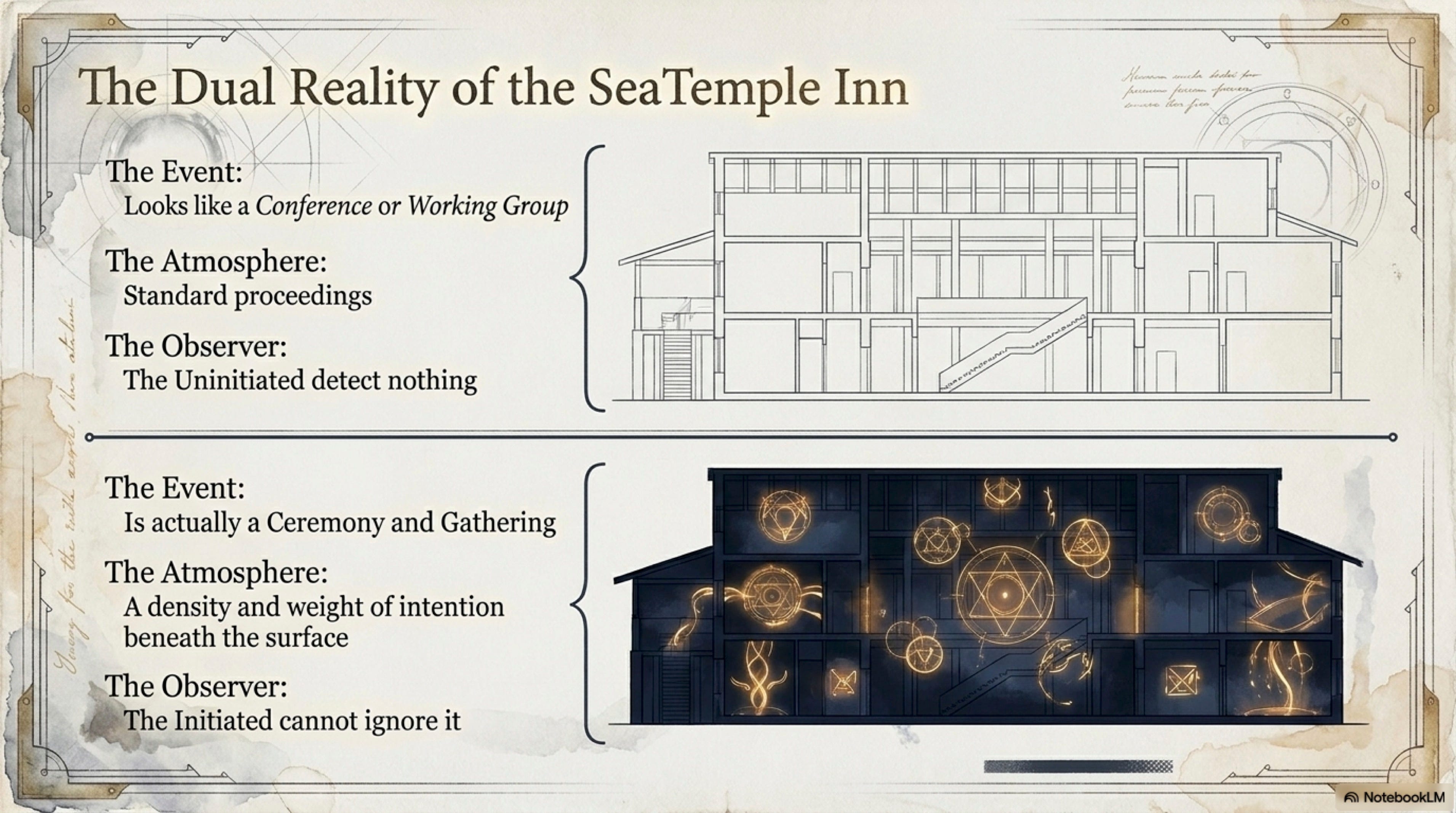
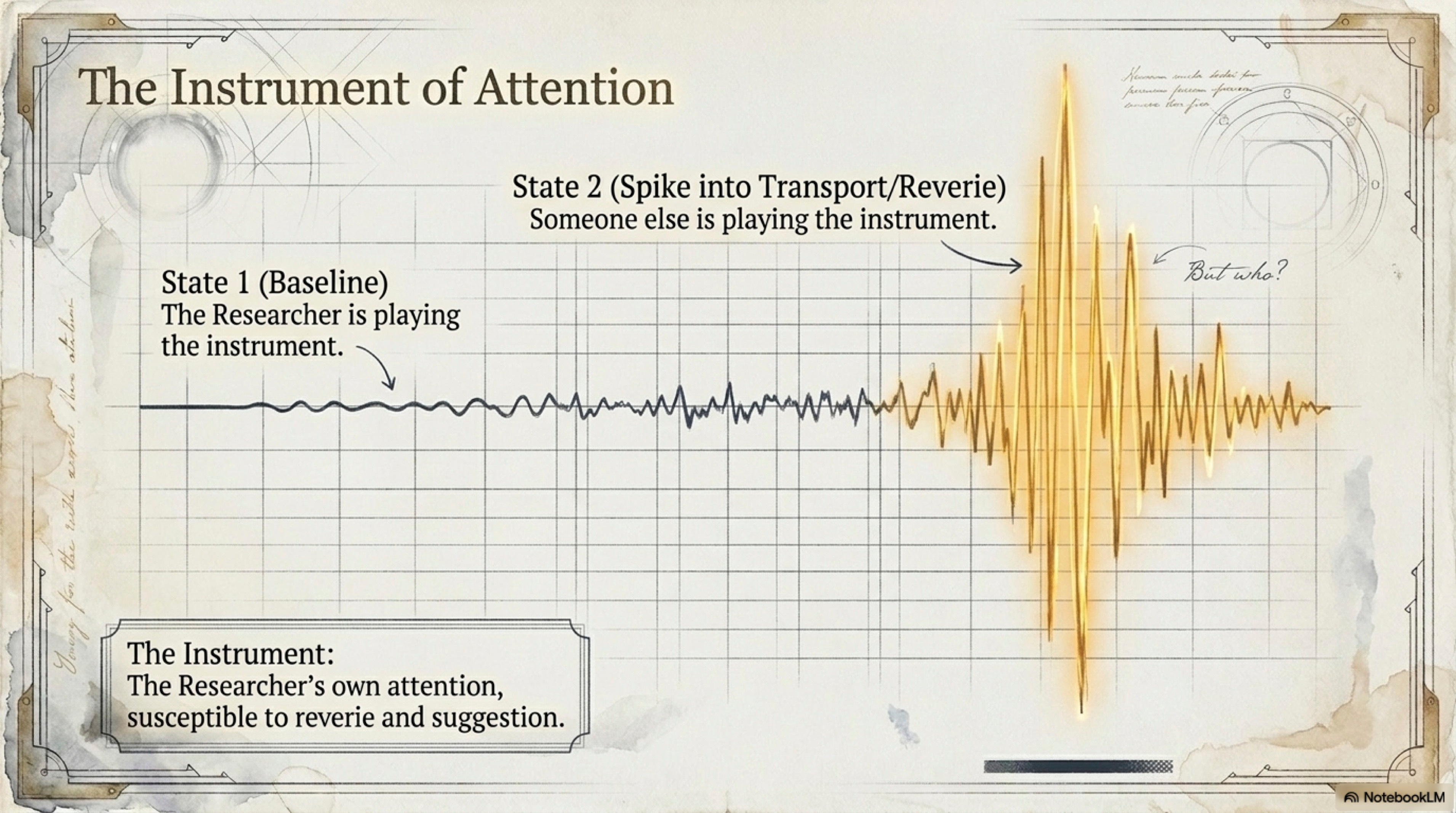
Wunderkabinett opens in a more ceremonial register than Attars. There is a gathering at the SeaTemple Inn. That event, from the outside, looks like any conference or working group. But it is not. There’s a density to the proceedings, a weight of intention beneath the surface. I wanted this to refer to the sort of thing that the uninitiated might not detect but that the initiated cannot ignore. The researcher who moves through this world is always susceptible to reverie, to suggestion, and to transport. Her attention is itself a kind of instrument. Sometimes she is playing it, sometimes someone else. But who?
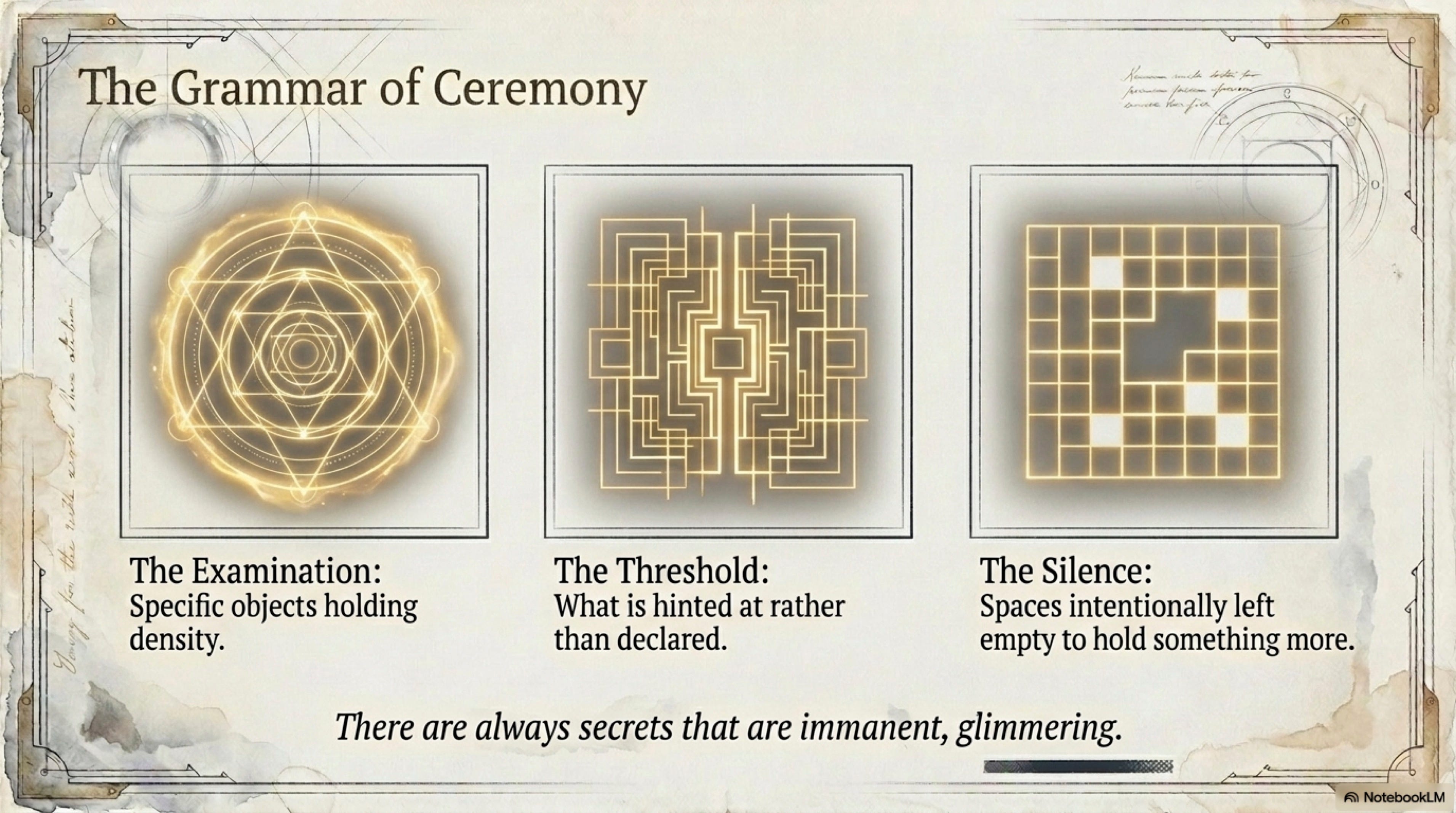
Ceremony shows up in other ways too: in the examination of specific objects, in what is hinted at rather than declared, in a threshold, or a silence that holds something more. There are always secrets that are immanent, glimmering.
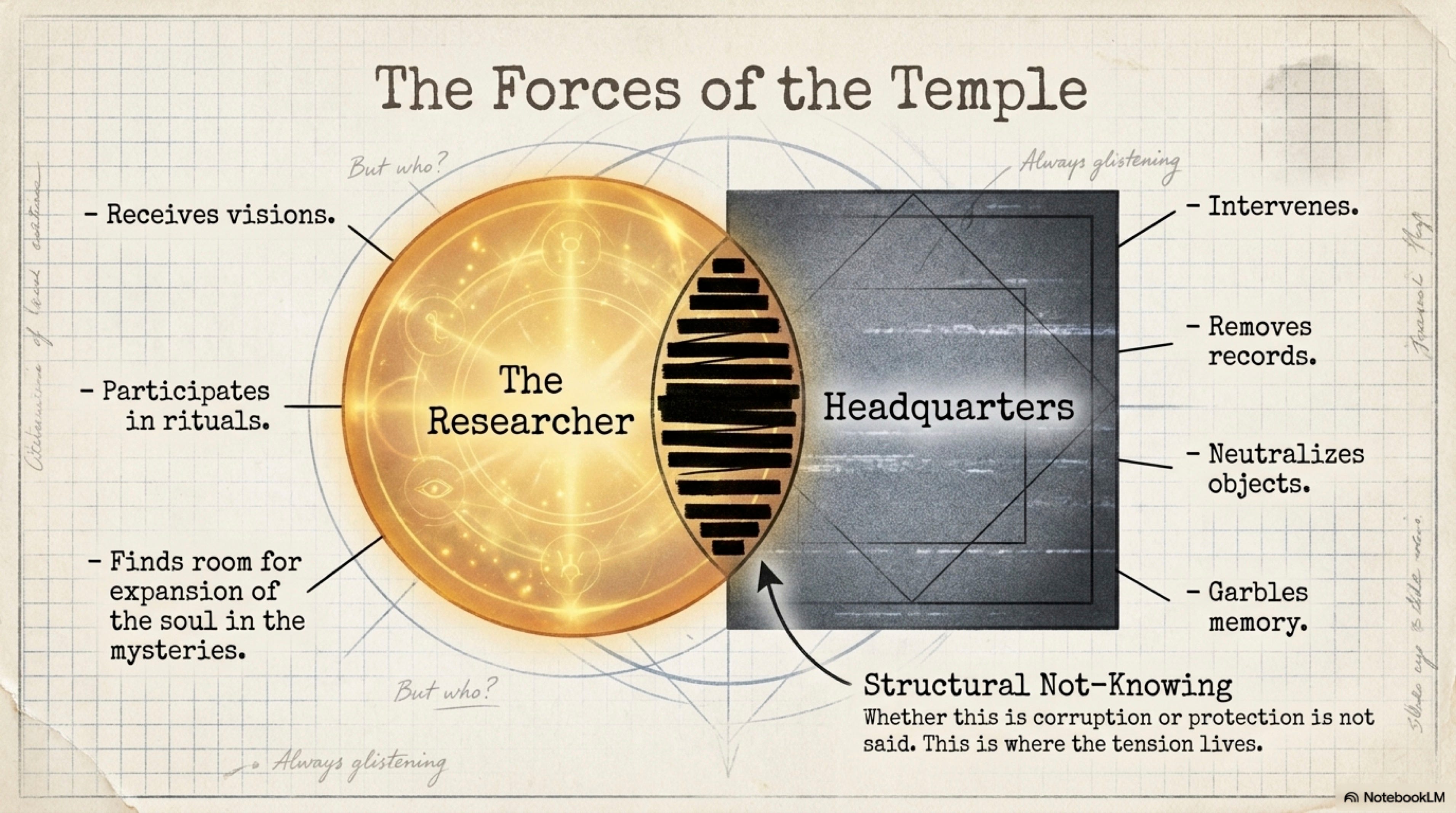
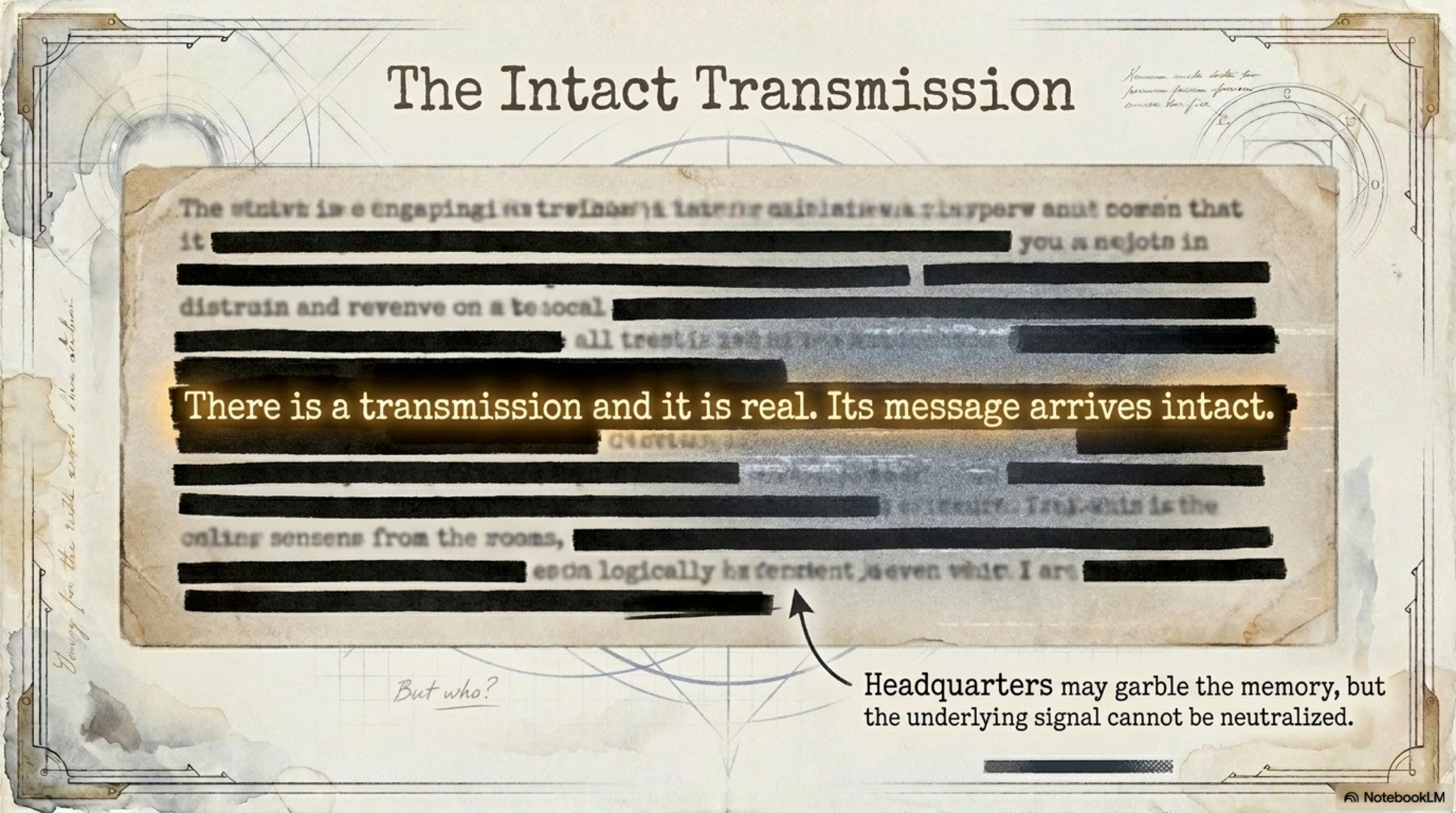
The researcher receives visions, participates in rituals, finds room for expansion of the soul in the mysteries. But then headquarters intervenes. Records are removed. Objects are neutralized. Memory is garbled. Whether this is corruption or protection is not said. That not-knowing is structural. It is where the tension lives. But it remains true that there is a transmission and it is real. Its message arrives intact.
This book is not a separate endeavour, and I can now see it’s continuous with everything else I’ve written. Its language and premise form one large metaphor in which I play and participate: the same investigation, in a different form, using perhaps different instruments, for poetic results.
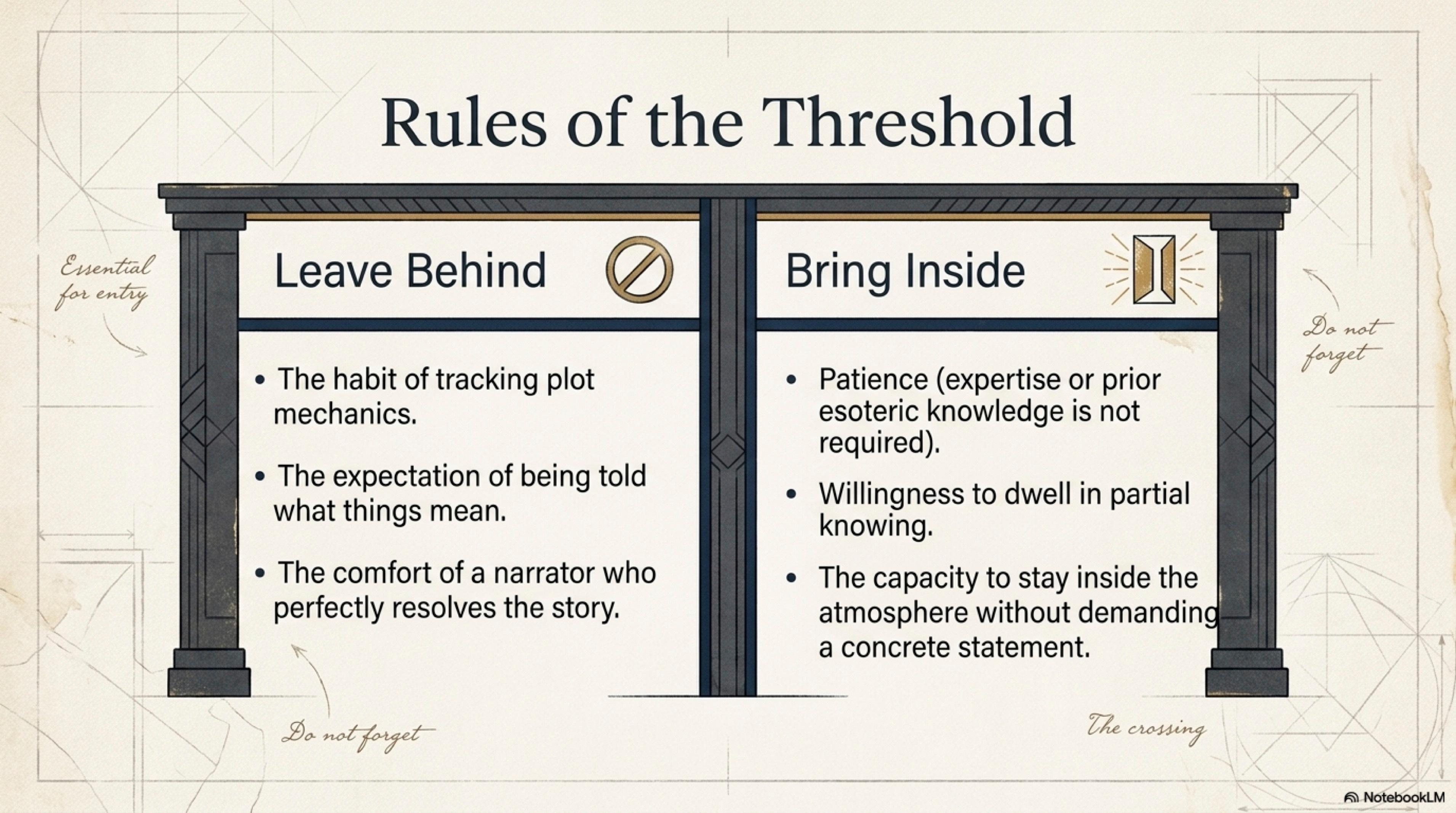
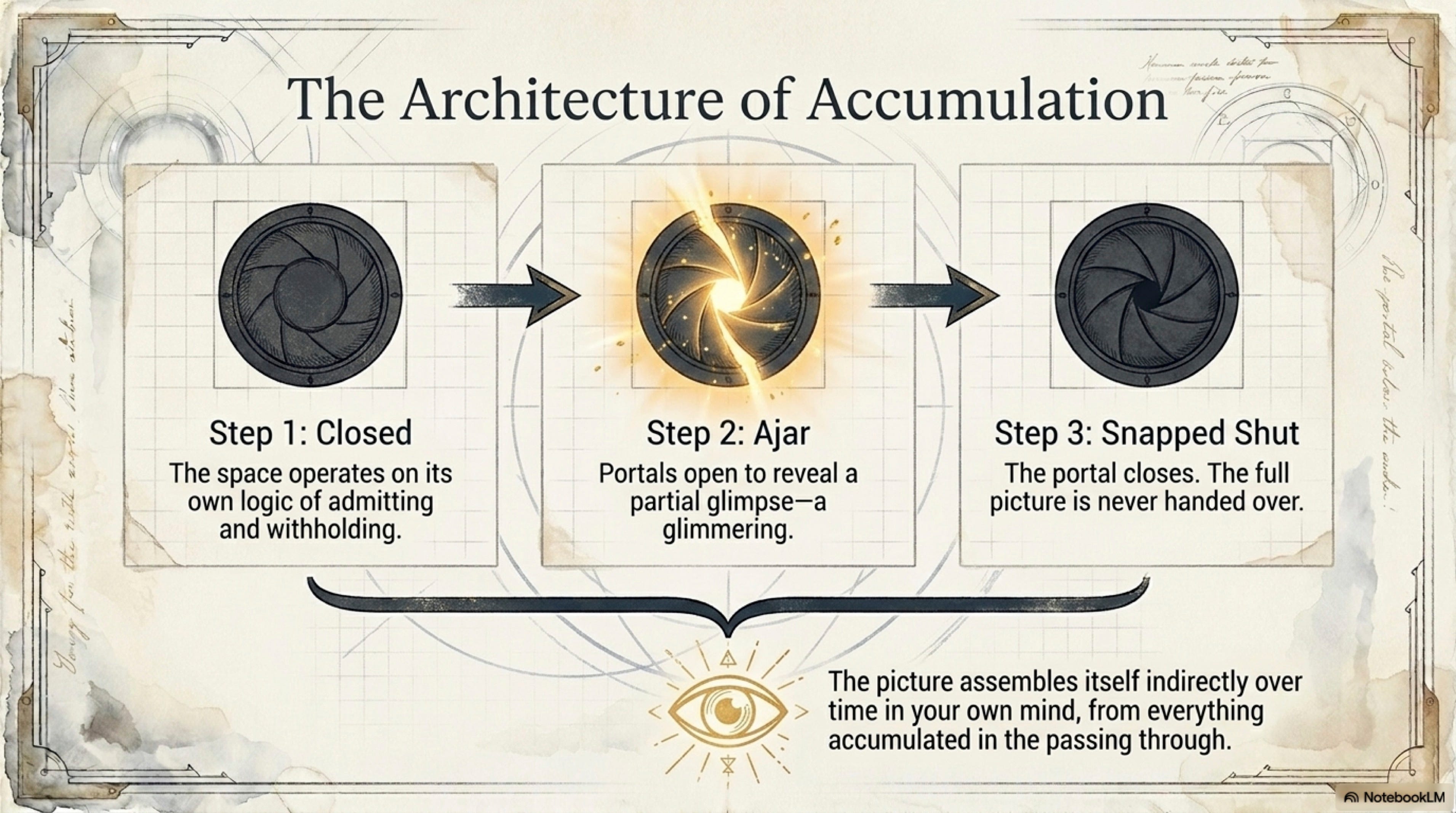
I’ve come to realize that any reader who wants to meet this book will need to leave certain things at the threshold. The habit of tracking plot. The expectation of being told what things mean. The comfort of a narrator who resolves. None of that is on offer here. From the moment the book is opened, the reader is entering a living space that has its own logic, its own way of admitting and withholding. Portals open and close. What is visible through them is a partial glimpse, just a glimmering, before the portal closes again. The full picture is not assembled for you. It assembles itself, over time, in your own mind's eye, from everything accumulated in the passing through, indirectly.
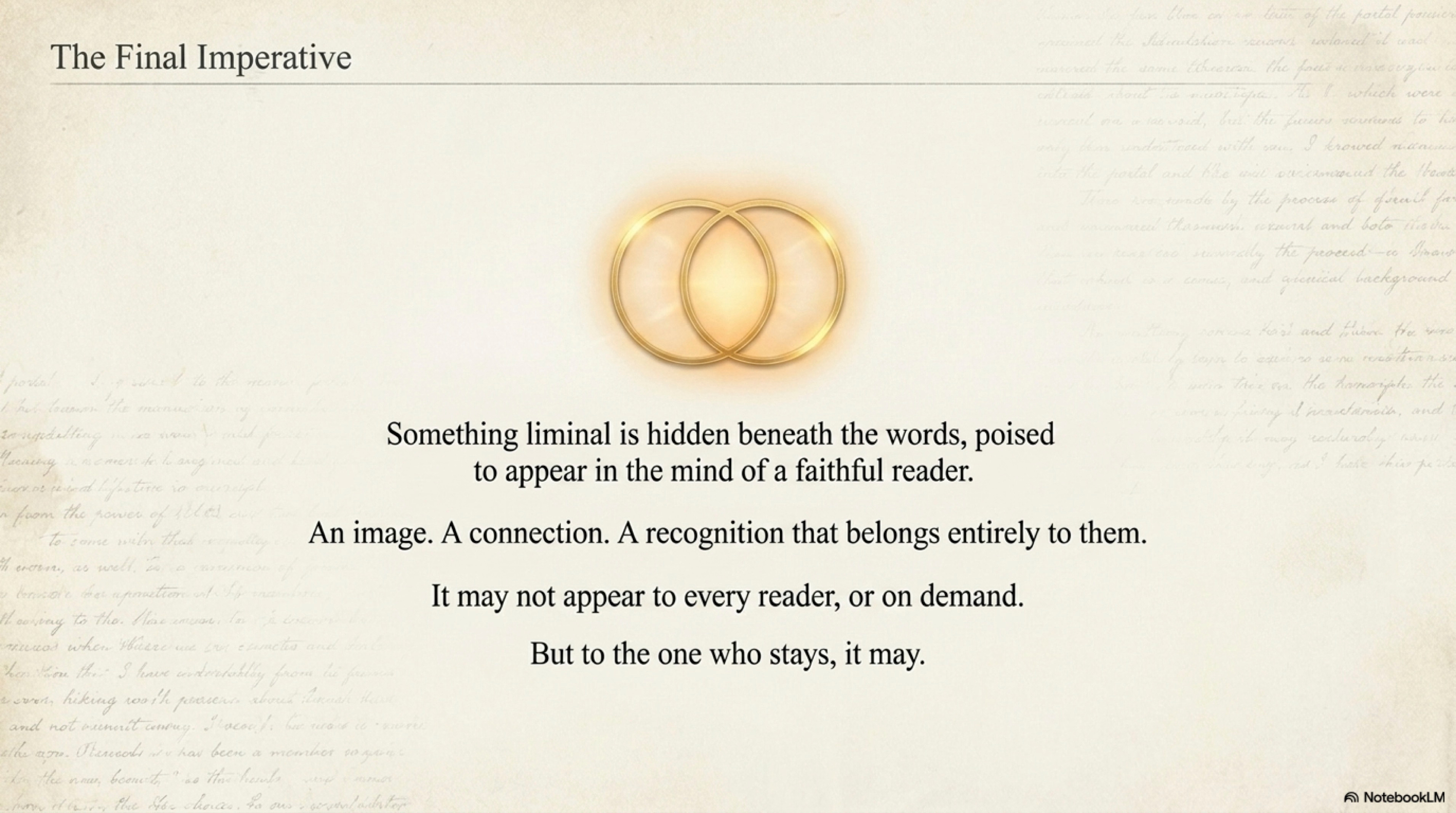
What the book asks from a reader is patience, not expertise or prior knowledge. Not even familiarity with esoteric tradition, though that deepens the layering. It asks for willingness to stay in partial knowing, to remain inside the atmosphere without demanding that it resolve into any sort of concrete statement. This book has its own imperative. Something liminal is hidden beneath the words, poised to appear in the mind of a faithful reader. A covered image or connection. A recognition? It may appear. Not to everyone, and not on demand. But to the one who stays, it may.
And in the midst of this swirl of thought after this writing, I realized that my Wunderkabinett’s protagonist is the soul herself, seeking truth in the confusion of knowledge systems. Researching and looking always for the REAL to reflect and unify. Does she find it, or is this, too, just another part of that age-old quest?
Project Wunderkabinett Slide Deck
Finding the themes in what I just wrote about how the atmosphere of the work may involve or challenge a reader, I put together this slide deck using NotebookLM to bring forward the key points.
Soon I’ll be asking for readers to reflect with me on the last part of this project. I’d be grateful if you’d like to join in that. Just reply to this email or leave a message in the comments.
Thanks so much for reading and sharing. Next issue will be back to my normal format, with perhaps only a peep of a mention of the Wunderkabinett.
Wow! Onward. Grace for you.
Carol...I'm intrigued and intimidated by your offering. Certainly curious and yearning.